

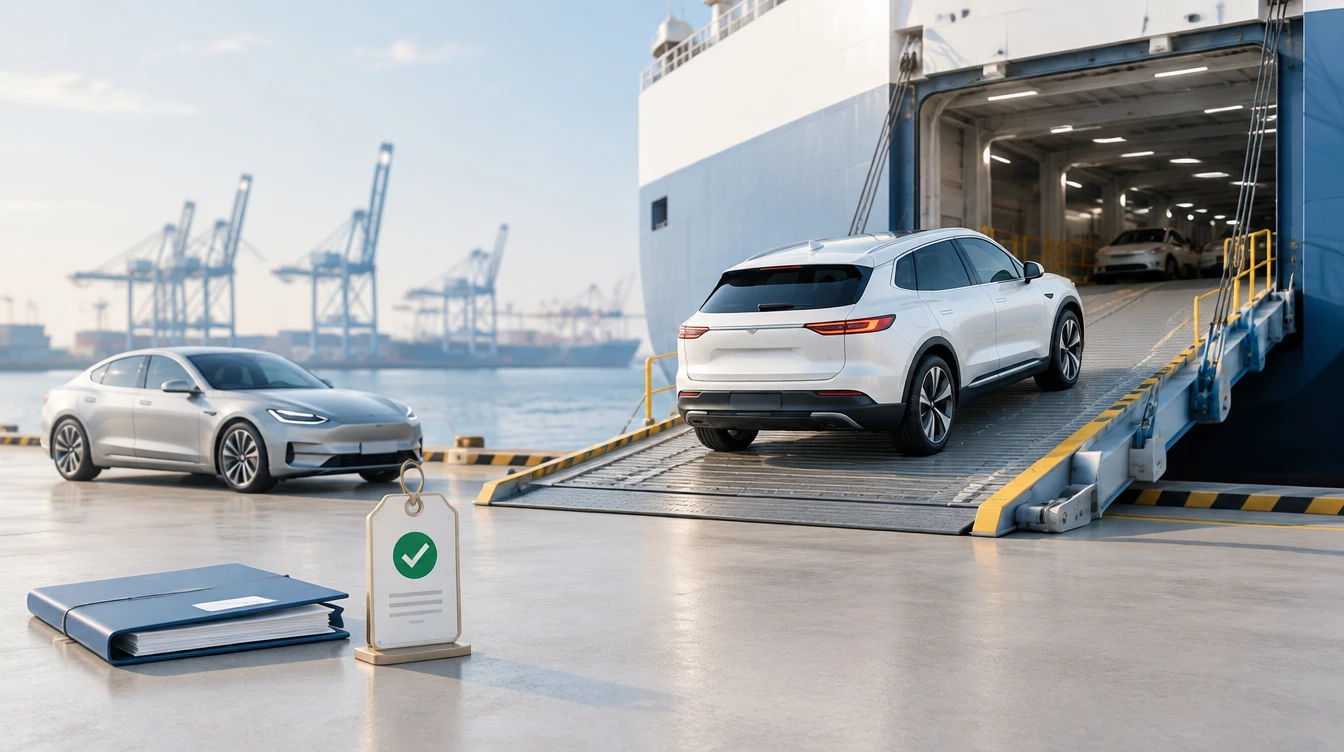
Importing Cars from China: Export Rules, Documents and Shipping
A practical guide to buying cars in China and shipping them abroad: EV export licences, standards, documents, battery shipping rules and RoRo vs container.
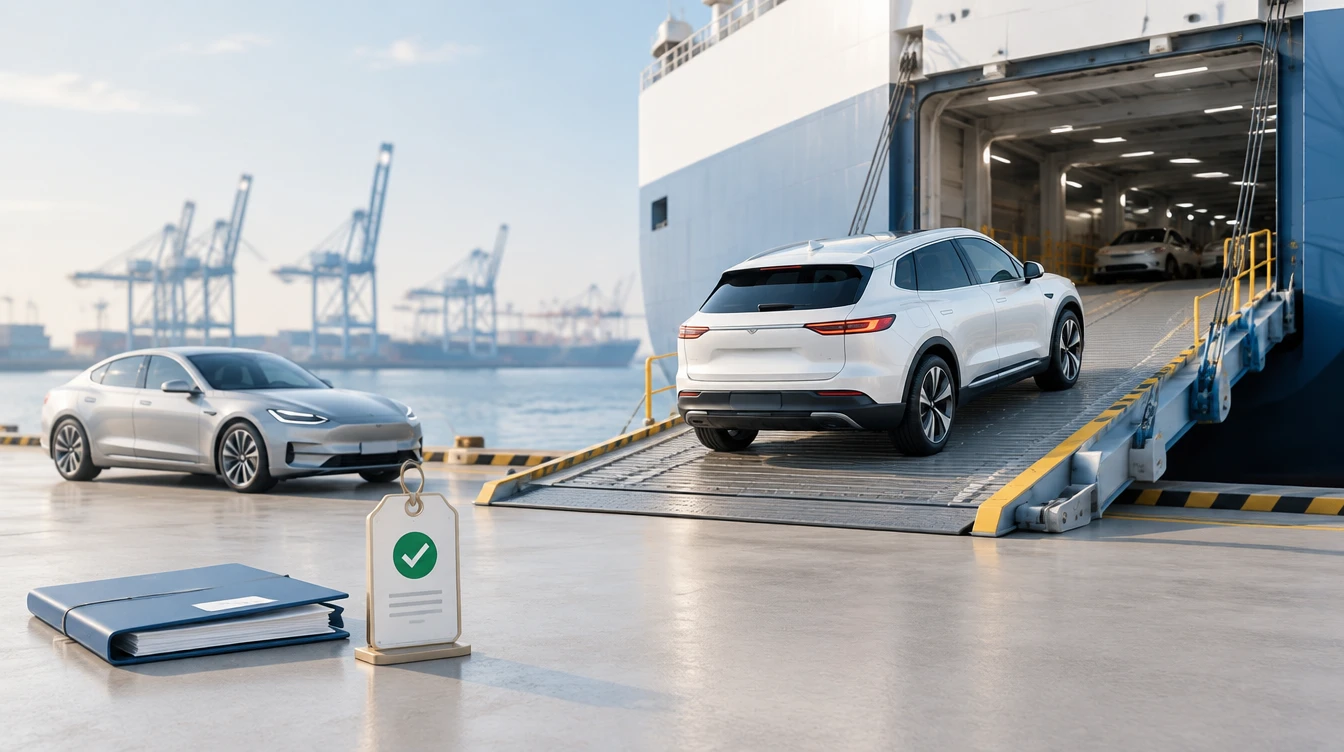
Buying a car in China and shipping it abroad takes four steps: confirm your country accepts the model, buy from a seller entitled to export it, choose a shipping method that handles the vehicle correctly, then clear and register the car at home. Two rule changes matter in 2026: China now requires an export licence for pure electric passenger cars, and battery-powered vehicles must be declared under new dangerous-goods entries at sea.
This guide is for dealers, fleet buyers and individuals anywhere in the world looking at Chinese brands. Last updated: November 2026.
Start with your destination country
Import rules are set by the country where the car will be registered, not by China. Before paying, check with your national standards and customs authorities:
Technical standards and conformity certificates required for the model.
Rules for used vehicles, if any, such as age or condition.
EV-specific requirements, such as charging connector type.
Duties, taxes and registration fees, which often move the final cost more than the purchase price.
Regional schemes exist. The Gulf Cooperation Council, for example, uses a common GCC conformity certificate for new motor vehicles, verified through the GCC Standardization Organization. Never assume one market's approval carries over to another.
What changed for Chinese EV exports in 2026?
Since 1 January 2026, exporting pure electric passenger vehicles that carry a VIN requires an export licence. The rule was announced jointly by China's Ministry of Commerce, Ministry of Industry and Information Technology, General Administration of Customs and State Administration for Market Regulation.
Point | What it means for buyers |
|---|---|
Who can export | Automakers and their authorised enterprises, for their own brands only |
Exporter conditions | Listed in the vehicle production catalogue, valid CCC certification, after-sales capability |
Liability | The automaker and its authorised partner share responsibility for quality and after-sales service |
In practice: ask any seller how the car will be exported and which company will appear as exporter on the documents.
Container or RoRo?
Method | Best for | Watch out for |
|---|---|---|
RoRo car carrier | Larger batches to ports served by car carriers | Fewer sailings than container lines; no personal cargo inside the car |
Container | One or a few cars, or vehicles needing more protection | Proper lashing and EV dangerous-goods rules |
EVs are dangerous goods at sea. Amendment 42-24 of the IMDG Code became mandatory on 1 January 2026. Lithium-ion battery vehicles are now declared as UN 3556 instead of the generic UN 3171, with UN 3557 for lithium metal and UN 3558 for sodium-ion. Wrong declarations or placards can lead to delays or rejection.
Step-by-step
Check destination rules for the model, standards and costs.
Choose the car and the seller, confirming export rights for EVs.
Inspect before final payment: VIN, specification, condition, and battery health for used EVs.
Prepare documents: invoice, ownership and export papers, and any conformity certificate your country requires.
Book shipping with a forwarder that handles EV dangerous-goods rules.
Clear customs and register under your country's procedures.
FAQ
Does exporting an EV from China require a licence?
Yes. Since 1 January 2026, pure electric passenger cars need an export licence, available to automakers and their authorised enterprises.
Are import rules the same in every country?
No. Standards, duties and used-car rules are national, so confirm with your own authorities first.
Is an EV shipped like a petrol car?
No. It is a Class 9 dangerous good at sea, declared under the UN number for its battery type.
Browse EcoAuto
EcoAuto lists new and certified pre-owned cars from Chinese brands, and EcoSail can arrange shipping to your port. To review your country's requirements before buying, book a consultation.
This article is general guidance. Regulations change, so confirm with the official authorities in your country before buying.
Related Articles
Importing from China to Saudi Arabia: SABER and Customs Guide
A practical guide for importers and exporters shipping Chinese goods to Saudi Arabia: SABER certific...


Canton Fair for International Buyers: Phases, Invitation Letter and Prep
A practical guide to the autumn 2026 Canton Fair: which phase to attend, how to register as a buyer,...


Sea Freight vs Air Freight from China: Which Is Better for Your Business?
اكتشف الفرق بين الشحن البحري والشحن الجوي